
Case Study: Developing a Theory of Change for The Diana Award
The Challenge
The Diana Award’s mission is to empower young people through mentoring, anti-bullying, and social action programmes. However, the organisation needed a clear framework to show how its activities contribute to long-term societal change. Without a cohesive Theory of Change (ToC), it was challenging to effectively communicate the strategy and impact to funders, partners, and stakeholders.
Our Approach: Collaborative Design with Diverse Voices
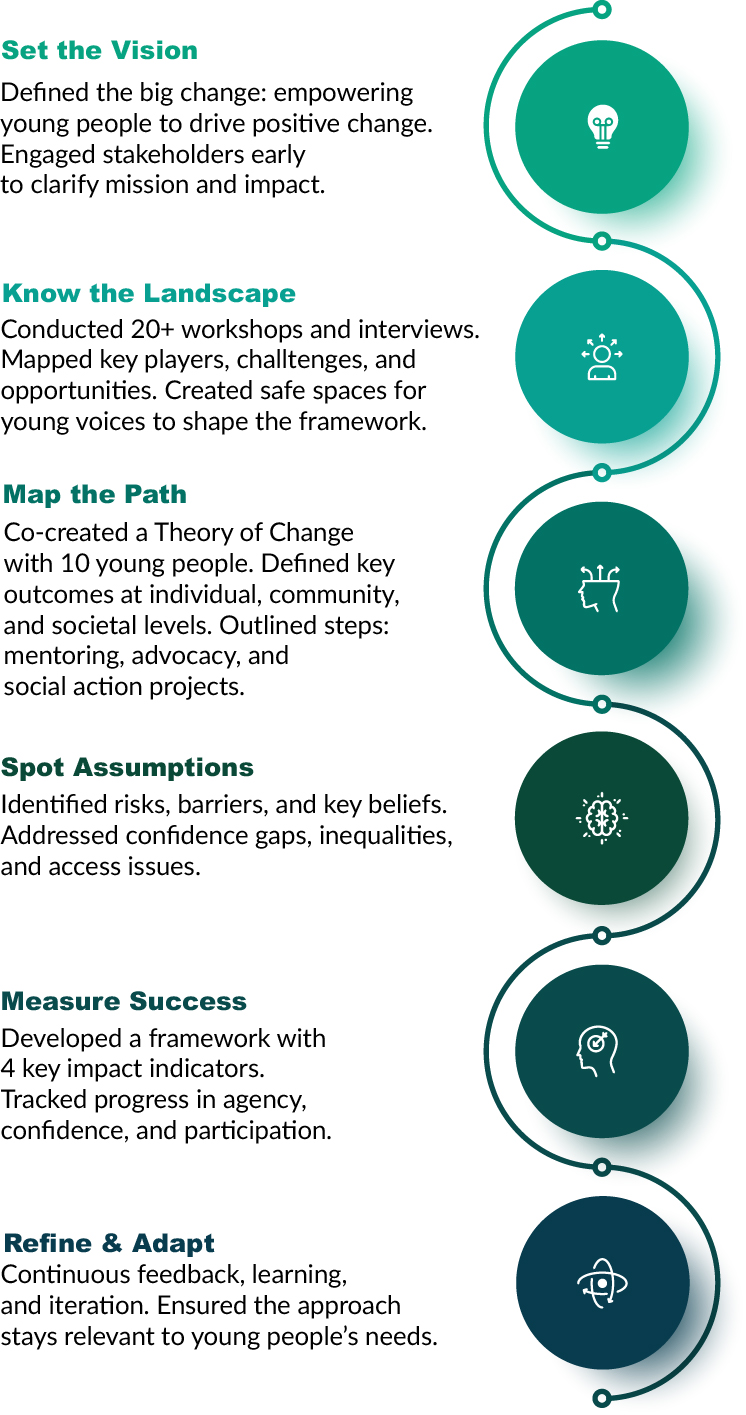
To ensure the Theory of Change truly reflected the mission of empowering young people, we prioritised their voices throughout the process. Young people from diverse socio-economic and personal backgrounds, along with staff, funders, and partners, were integral to co-designing the ToC.
Our Six-Phase Theory of Change Process
Results That Matter
Inclusivity at Its Core
The voices of young people from diverse backgrounds were central to the process, ensuring the ToC authentically reflected their needs and aspirations.
Clear Strategic Focus
The ToC provided a cohesive framework linking The Diana Award’s activities to its mission, guiding programme design and resource allocation.
Effective Stakeholder Communication
The visual ToC became a vital tool for funders and partners, showcasing how their support contributes to transformational outcomes for young people.
Measurable Impact
The measurement framework tracks progress on outcomes critical to youth empowerment
Enhanced self-esteem and confidence.
Ambition to inspire social change.
Greater comfort in voicing opinions.
The Impact
The Diana Award’s Theory of Change has become the cornerstone of its strategy, creating a shared understanding of its goals and amplifying its ability to empower young people. By including diverse perspectives, particularly from young people, the ToC ensures that programmes are designed to inspire agency, build confidence, and support social change.